South America Electric Plug Types
South America might just be the world's most electrically diverse continent, where neighboring countries can have completely incompatible electrical systems despite sharing thousands of kilometers of borders.
Brazil chose to develop its own modern Type N standard in 2002, Argentina adopted the Australian Type I system, Chile uses European Type C and L plugs, while other nations maintain a mix of American and European influences from different periods of their history.
This electrical Tower of Babel means that a traveler crossing from Buenos Aires to Rio de Janeiro to Santiago will need at least three different adapters, and possibly voltage converters too, as the continent uses both 110V and 220V systems.
Understanding South America's electrical complexity is essential for any journey through this magnificent continent, where the diversity of plug types matches the incredible variety of landscapes from Patagonian glaciers to Amazon rainforests.
Interactive South America Map
Plug Types Used in South America
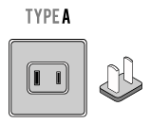
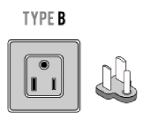
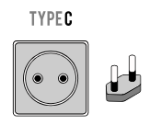
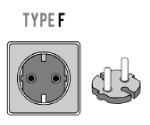
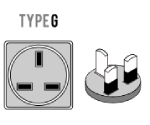
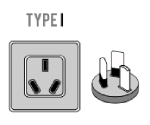
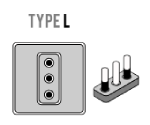
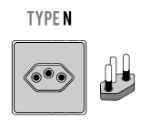
Interactive Demonstration - Most Common South America Plugs
Type A - North American/Japanese 2-pin
Type A electrical plug features two flat parallel blades and is the standard ungrounded plug used in North America, Central America, and Japan. This plug design dates back to 1904 and remains one of the most widely used plug types globally.

Type B - North American/Japanese 3-pin grounded
Type B electrical plug is the grounded version of Type A, featuring two flat parallel blades plus a round grounding pin. This three-prong plug provides additional safety through its ground connection and is the standard grounded plug in North America.

🌍 Real-World Usage Patterns Across South America
Colonial history and trade relationships shaped South America's electrical landscape. Here's the practical reality of what plugs you'll actually encounter:
Type A
7 countriesType C
8 countriesType I
1 countriesType N
1 countriesColonial & Historical Influences
🌎 South America showcases the world's greatest plug diversity: Brazil developed its own Type N standard, Argentina adopted Australian Type I, while other countries blend American and European influences based on trade relationships and immigration patterns.
Overview
South American electrical diversity reflects varied colonial histories, post-independence development paths, and different industrialization patterns. No continent matches South America's plug type variety, requiring careful adapter planning for multi-country travel.
Recommended Adapter
Universal adapter absolutely essential - South America uses more plug types than any other continent. Must include Types A, B, C, I, and N capabilities.
⚡ Voltage Warning
Mixed voltage systems: some countries use 110V, others 220V, some have both. Always verify device compatibility and consider voltage converters.
Transportation & Power Access
🚂 Trains
Limited rail networks with few power amenities except some Argentine and Brazilian routes.
🚌 Buses
Long-distance buses increasingly offer USB charging. Premium services may have power outlets.
✈️ Airports
Major airports provide international charging stations. Smaller airports have limited options.
🏨 Hotels
International hotels in major cities may lend adapters. Regional hotels rarely provide adapter services.
All South America Countries
| Country | Plug Types | Voltage | Frequency | Description |
|---|---|---|---|---|
 Argentina Argentina | Type I, Type C | 220V | 50Hz | Argentina uses Type I, Type C electrical outlets with 220V at 50Hz frequency. Australian/New Zealand standard with angled pins for secure connection. Unique design prevents accidental disconnection. |
 Bolivia Bolivia | Type A, Type C | 230V | 50Hz | Bolivia uses Type A, Type C electrical outlets with 230V at 50Hz frequency. European standard system compatible with most continental European devices. Widely adopted for international compatibility. |
 Brazil Brazil | Type N, Type C, Type A | 127V | 60Hz | Brazil uses Type N, Type C, Type A electrical outlets with 127V at 60Hz frequency. European standard system compatible with most continental European devices. Widely adopted for international compatibility. |
 Chile Chile | Type C, Type L | 220V | 50Hz | Chile uses Type C, Type L electrical outlets with 220V at 50Hz frequency. European standard system compatible with most continental European devices. Widely adopted for international compatibility. |
 Colombia Colombia | Type A, Type B | 110V | 60Hz | Colombia uses Type A, Type B electrical outlets with 110V at 60Hz frequency. Standard North American electrical system with grounded and ungrounded outlets. Most modern electronics work without adapters. |
 Ecuador Ecuador | Type A, Type B | 120V | 60Hz | Ecuador uses Type A, Type B electrical outlets with 120V at 60Hz frequency. Standard North American electrical system with grounded and ungrounded outlets. Most modern electronics work without adapters. |
 Guyana Guyana | Type G, Type A, Type B | 240V | 60Hz | Guyana uses Type G, Type A, Type B electrical outlets with 240V at 60Hz frequency. Standard North American electrical system with grounded and ungrounded outlets. Most modern electronics work without adapters. |
 Paraguay Paraguay | Type C | 220V | 50Hz | Paraguay uses Type C electrical outlets with 220V at 50Hz frequency. European standard system compatible with most continental European devices. Widely adopted for international compatibility. |
 Peru Peru | Type A, Type B, Type C | 220V | 60Hz | Peru uses Type A, Type B, Type C electrical outlets with 220V at 60Hz frequency. Standard North American electrical system with grounded and ungrounded outlets. Most modern electronics work without adapters. |
 Suriname Suriname | Type C, Type F | 127V | 60Hz | Suriname uses Type C, Type F electrical outlets with 127V at 60Hz frequency. European standard system compatible with most continental European devices. Widely adopted for international compatibility. |
 Uruguay Uruguay | Type C, Type F | 220V | 50Hz | Uruguay uses Type C, Type F electrical outlets with 220V at 50Hz frequency. European standard system compatible with most continental European devices. Widely adopted for international compatibility. |
 Venezuela Venezuela | Type A, Type B | 120V | 60Hz | Venezuela uses Type A, Type B electrical outlets with 120V at 60Hz frequency. Standard North American electrical system with grounded and ungrounded outlets. Most modern electronics work without adapters. |
Frequently Asked Questions
Why does Brazil use different plugs from neighboring countries?
Brazil adopted the IEC 60906-1 standard (Type N) in 2002 as part of modernizing its electrical infrastructure. This international standard was chosen for safety and compatibility reasons, though it created adapter challenges for regional travel.
Why does Argentina use Australian-style plugs?
Argentina adopted Type I plugs due to historical trade relationships and technical cooperation with Australia in the early-mid 20th century. The angled-pin design was seen as safer and more secure than alternatives available at the time.
Do I need voltage converters in South America?
Possibly - South American countries use both 110V and 220V systems, and some (like Brazil) have both voltages in the same country. Always check your devices' voltage compatibility and bring converters for single-voltage appliances.
Which South American countries have the most reliable electricity?
Chile, Uruguay, and southern Brazil have the most reliable electrical systems. Argentina's grid can be unstable during economic stress. Northern and Andean countries vary significantly between urban and rural areas.
What's the best adapter strategy for multi-country South American travel?
Bring a high-quality universal adapter that includes Types A, C, I, and N. Consider separate dedicated adapters for countries where you'll spend significant time. Include voltage converters for non-dual-voltage devices.
Did You Know?
💡 Brazil has the world's third-largest hydroelectric capacity, generating about 65% of its electricity from water power
💡 Paraguay exports about 90% of its electricity generation - it produces far more than it consumes from massive hydroelectric dams
💡 Argentina experienced one of the world's largest blackouts in 2019, affecting nearly 50 million people across multiple countries
💡 Chile is rapidly expanding solar power in the Atacama Desert, one of the world's sunniest locations
💡 Venezuela has some of the world's lowest electricity prices due to subsidies, but faces severe infrastructure reliability problems
💡 The Itaipu Dam on the Brazil-Paraguay border is one of the world's largest hydroelectric facilities
Electrical History
Colonial influences, immigration patterns, and industrial development created South America's electrical complexity. Argentina adopted Australian-type plugs, Brazil developed its own IEC-based system, while other countries maintained European or American influences based on trade relationships.
Cultural Context
South American electrical development varies dramatically by country wealth and geography. Urban areas show rapid smartphone adoption. Rural electrification ongoing, especially in Amazon regions. Energy independence important due to geographic isolation.
Seasonal Considerations
Southern Hemisphere seasons opposite to North America/Europe. Summer (Dec-Mar) cooling demand, winter (Jun-Sep) heating needs. Rainy seasons affect hydroelectric-dependent countries.
Countries Grouped by Plug Type
Type I, Type C (1 countries)
Type A, Type C (1 countries)
Type N, Type C, Type A (1 countries)
Type C, Type L (1 countries)
Type G, Type A, Type B (1 countries)
Type C (1 countries)
Type A, Type B, Type C (1 countries)
South America Travel Summary
Key Facts
- • 12 countries across South America
- • 8 plug types in use: A, B, C, F, G, I, L, N
- • Voltage range: 110V - 240V
- • Frequency: 50Hz (60Hz in some regions)
Travel Recommendation
Universal adapter absolutely essential - South America uses more plug types than any other continent. Must include Types A, B, C, I, and N capabilities.⚡ Mixed voltage systems: some countries use 110V, others 220V, some have both. Always verify device compatibility and consider voltage converters.